
 +48 455 450 117
  Medical clothing manufacturer


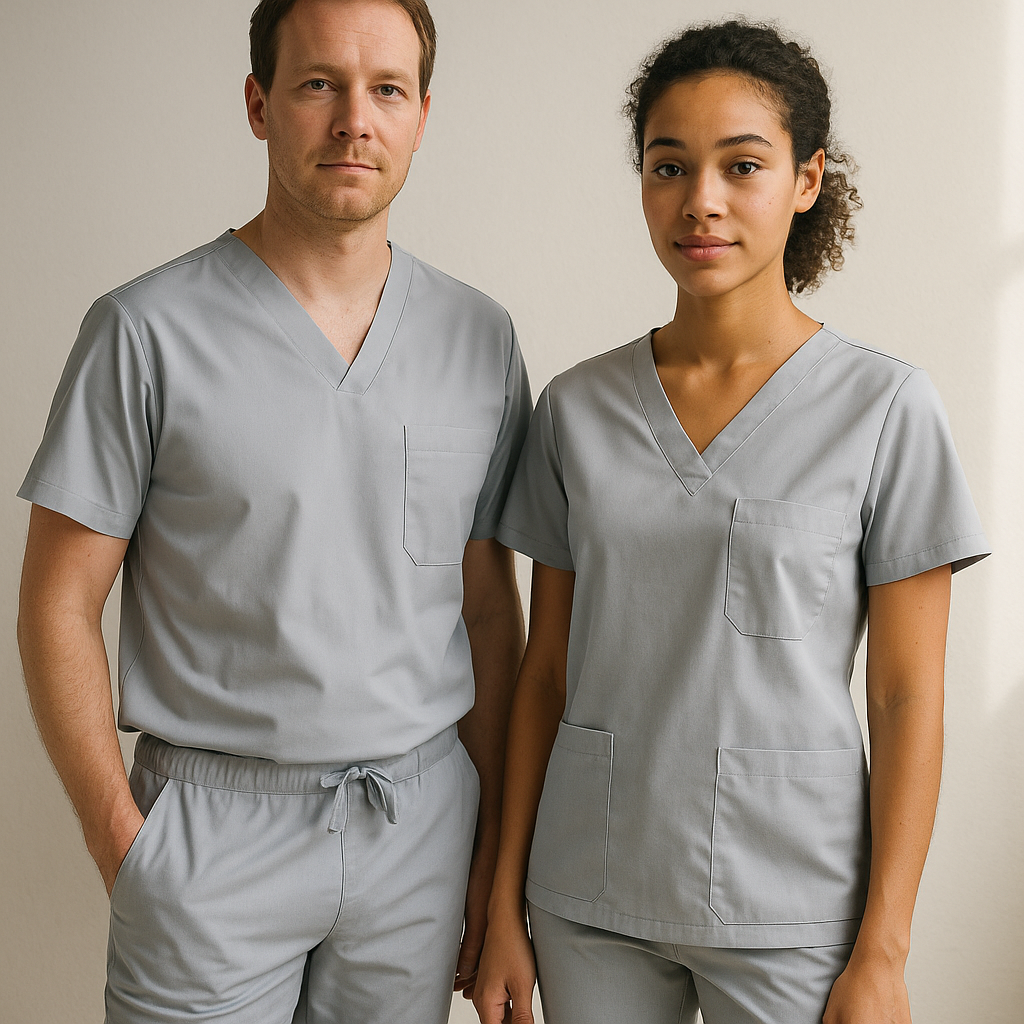
People working in healthcare who tend to overheat often struggle to find suitable professional clothing. Thermal comfort is not only about convenience but also about safety and work efficiency. In this article, we explain how to select medical clothing fabrics and styles that perform well even under challenging temperature conditions.
Why Does the Right Fabric Matter?
Choosing the right fabric is fundamental for thermal comfort. Medical garments should allow the skin to breathe and wick away moisture, minimizing overheating and the unpleasant feeling of dampness.
Moisture-Wicking Materials
- Cotton: Natural, breathable, absorbs moisture well but dries slowly.
- Microfiber Polyester: Modern synthetic fabrics that quickly pull sweat away, keeping you dry.
- Cotton-Polyester Blends: Combine the comfort of natural cotton with the breathability of synthetics.
Avoid Non-Breathable Fabrics
Materials such as PVC or fully sealed fabrics can trap heat and sweat, leading to discomfort and promoting overheating.
Choosing the Cut and Style of Medical Clothing
Garment construction heavily influences ventilation and freedom of movement. Well-chosen cuts help reduce sweating and enhance work comfort.
Loose Fits and Layering
- Opt for clothing with a slightly loose fit that doesn’t cling tightly to the body.
- Avoid tight elements like narrow sleeves or snug trousers.
- Use layering principles to adjust body temperature according to the environment.
Ventilation Features
Consider models with added ventilation elements, such as mesh inserts or vents, to improve airflow.
Practical Examples of Medical Clothing for Those Who Overheat
- Women's medical sets made from cotton-polyester blends ensuring proper air circulation.
- Medical T-shirts and polo shirts crafted from quick-drying synthetic fabrics.
- Women's jogger-style medical trousers with a looser fit to boost ventilation.
- Medical fleeces and sweatshirts made from breathable materials, perfect for cooler days or air-conditioned environments.
How to Care for Medical Clothing to Preserve Thermal Properties?
Proper care enhances durability and functional properties. We recommend:
- Washing at temperatures advised by the manufacturer to protect fabric structure.
- Avoiding harsh detergents and bleach.
- Steering clear of high-temperature drying that may damage synthetic fibers.
Conclusion
For individuals prone to overheating, selecting medical clothing with the right materials and fit is crucial. Choose breathable, quick-drying fabrics and loose designs that promote ventilation and comfort during work. Explore the wide range of medical clothing at ModernCompany, designed to meet these needs while offering style and durability.
 Log in with Facebook
 Log in with Google